A wedding slideshow is a sequence of photos projected in front of the guests, accompanied by music, where the duration directly affects the audience’s level of attention. Beyond a certain threshold, visual fatigue sets in and the emotion fades, regardless of the care taken in the editing.
Cumulative projection time during the evening: the real parameter to master
Most guides refer to the duration of the slideshow as an isolated block. The problem is that couples today multiply projection times: photo slideshow, video speeches, messages from those who couldn’t attend, reel-type montages. Each piece of content chips away at the guests’ attention span.
Some DJs and wedding planners now recommend thinking in terms of total cumulative duration of projected content throughout the evening. If video messages or a short film are also planned, the duration of the photo slideshow should be reduced accordingly to avoid overwhelming the audience.
Specifically, as detailed by the site La Mariée Rêveuse, the photo slideshow loses impact as soon as it is added to other projections without the overall duration being considered in advance. It’s better to make choices between different formats rather than stacking them.
Wedding slideshow duration: the range that preserves attention
Since 2023-2024, several videographers and wedding service providers have noted a clear reduction in the duration of projected content during the evening. The preference is for short formats, between five and seven minutes, shown just before the first dance or between two key moments of the reception.
Exceeding ten to twelve minutes in a dark room accelerates visual fatigue, especially with high-brightness projectors and LED screens now common in reception halls. The size of the screen, ambient brightness, and table arrangement play a direct role in guest comfort.
A slideshow that is too short (less than three minutes) frustrates loved ones who are waiting to see themselves in the photos. A slideshow that is too long turns an emotional moment into a movie theater experience where conversations fade away. The five to seven-minute window offers the best compromise between shared emotion and the rhythm of the evening.
Number of photos and transition rhythm: calibrating the content
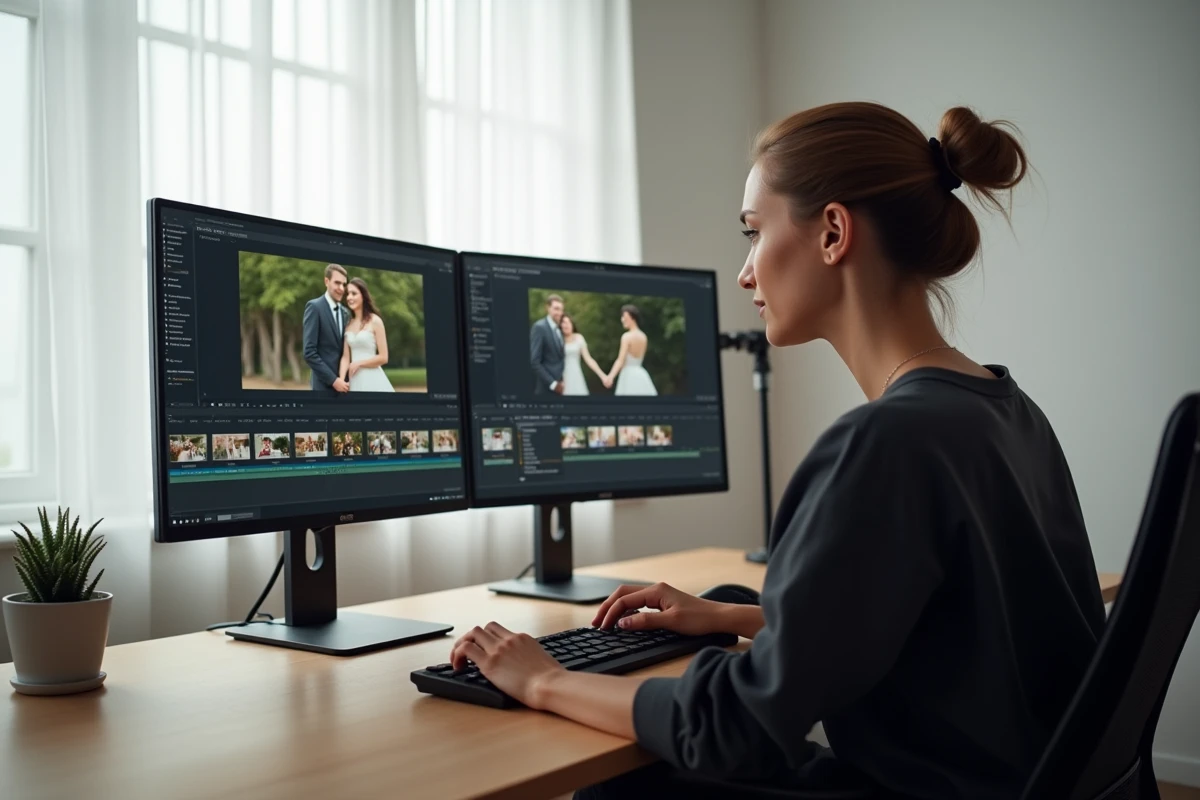
The duration directly depends on the number of images and the display time for each photo. In practice, displaying a photo too briefly prevents guests from identifying it, while displaying it for too long creates a sense of slowness.
For a slideshow of five to seven minutes, here are the parameters to set:
- Plan for four to six seconds of display per photo, including transitions, to allow time to recognize faces without slowing the pace
- Select between sixty and eighty photos maximum, eliminating duplicates and overly similar shots
- Vary the rhythm of transitions: alternate quick sequences for group photos and slightly longer pauses for portraits or key moments
- Synchronize photo changes with key moments in the music to enhance the emotional impact of the montage
The selection of images is the main lever. Three strong photos are better than ten average photos: each image should tell something or provoke a reaction.
Adapting the duration to the reception format and number of guests
A seated dinner for eighty people and a standing cocktail for two hundred guests do not require the same format. Wedding audiovisual professionals recommend adapting the duration of the slideshow to the type of reception.
For large weddings, fragmenting into several mini-thematic slideshows (childhood of the couple, couple’s life, preparations for the big day) works better than a single block. These short sequences, lasting two to three minutes each, can be shown at different times during the evening without breaking the flow.
When to launch the projection in the evening’s schedule
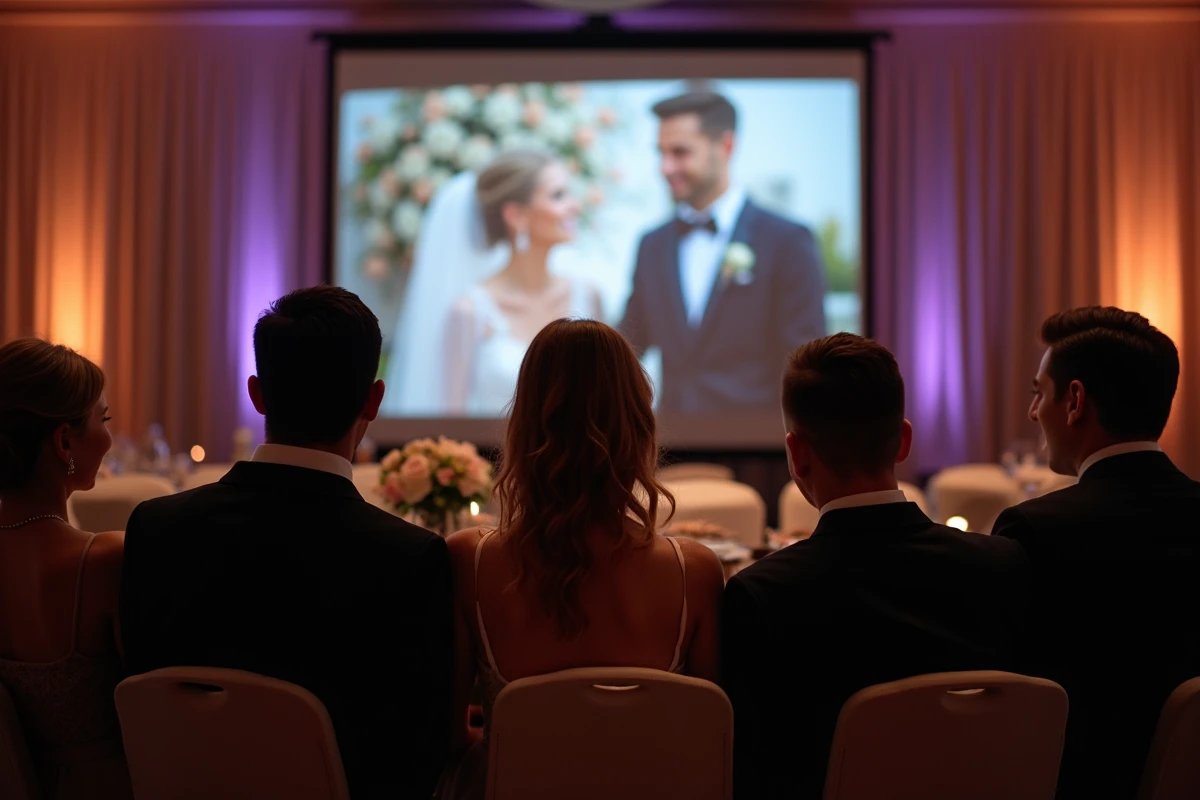
The placement of the slideshow in the evening’s program is as important as its duration. Two time slots work well:
- Just before the first dance, when guests are seated and attentive after the meal, creating an emotional transition to the party
- Between the main course and dessert, during a calm moment when attention naturally refocuses
- As a visual background during the cocktail hour, provided the duration is reduced to three or four minutes and the sound is turned off to avoid drowning out conversations
Launching a slideshow in the middle of the dance floor, when the energy is at its peak, is the best way to empty the room in seconds. The timing of the broadcast protects both the atmosphere and the duration itself.
Technical projection conditions: an underestimated factor
Since the widespread use of LED screens and high-brightness projectors in reception halls, the projection conditions directly influence guests’ tolerance for duration. An image projected onto a white wall in a poorly darkened room tires the eyes faster than a dedicated screen in a properly dimmed space.
Testing the equipment in the venue before the big day allows for adjustments to brightness and format. If the screen is small or poorly placed, shortening the slideshow by a few minutes compensates for the loss of visual comfort. Conversely, a well-calibrated large screen allows for a slightly longer format without losing attention.
The sound deserves the same attention. Music that is too loud drowns out guests’ reactions and creates distance from the images. A volume adjusted to accompany without dominating leaves room for laughter and comments, which are part of the moment.
The duration of a wedding slideshow is determined based on the overall program of the evening, the number of guests, and the technical conditions of the venue. Five to seven minutes of well-chosen photos, projected at the right moment, leave a stronger impression than a fifteen-minute montage where attention wanes after the third song.