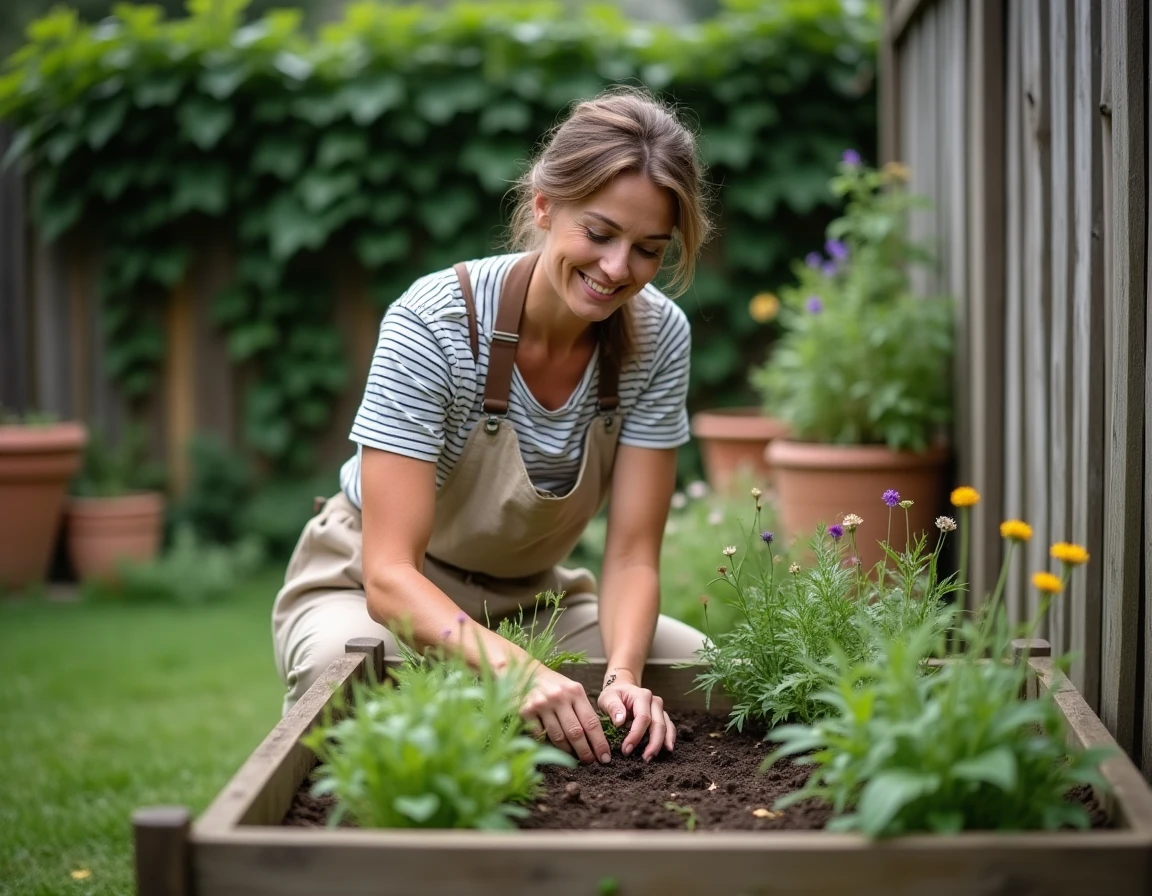
Between the strengthened ban on synthetic pesticides for individuals and the increasing episodes of drought, the ecological garden is no longer a marginal option. The question now is: what approaches produce a garden that is both resilient, beneficial to biodiversity, and visually unique, without resorting to standardized decorative recipes?
Rain garden, flower meadow, cool island: a comparison of ecological approaches
Three models of ecological landscaping stand out for their objectives, installation constraints, and visual rendering. The table below summarizes their main characteristics.
| Approach | Primary function | Maintenance | Effect on biodiversity | Visual rendering |
|---|---|---|---|---|
| Rain garden | Management of runoff water, filtration of pollutants | Low after installation (occasional weeding) | High attractiveness for pollinating insects | Very flower-rich micro-zone, natural bowl-like appearance |
| Flower meadow | Soil cover without mowing, habitat for wildlife | One to two mowings per year | Refuge for beneficial insects and butterflies | Rustic appearance, varying heights and colors depending on the season |
| Cool island (trees, green pergolas) | Reduction of ground temperature | Moderate (pruning, supplemental watering in the first years) | Habitat for birds, shade favorable to understory plants | Structured, marked volumes, canopy |
The rain garden remains the least known of the three, while several French municipalities have been promoting it for a few years as an alternative to traditional gravel and drains. Its principle: a planted depression that captures runoff, limits local flooding, and creates a dense planting area without artificial watering. On the garden of Maisons Alternatives, this type of landscaping is part of a broader reflection on ecological housing and outdoor spaces.
In contrast, the flower meadow is better suited for large areas where a deliberately “disordered” appearance is accepted. The cool island, on the other hand, requires a heavier initial investment (planting slow-growing trees, pergola structure) but produces measurable effects on summer thermal comfort.
Labbé Law and the end of pesticides: what it concretely changes for the soil and plants
The Labbé law, strengthened in 2019, prohibits most synthetic chemical pesticides for amateur gardeners. This regulatory constraint has a direct effect on the choice of plants and the design of flower beds.
A garden designed without phytosanitary products relies on local plants adapted to the soil and climate. This means giving up demanding horticultural varieties in favor of indigenous or naturalized species, capable of resisting diseases on their own.
Managing pests and diseases without chemicals
Plant diversity replaces curative treatment. By associating plants with complementary properties (repellent aromatic plants near sensitive vegetables, for example), pest pressure is reduced without chemical intervention.
- Wild hedges composed of several local species shelter the natural predators of aphids and caterpillars, such as ladybugs and lacewings
- Unmowed areas at the edge of the flower bed serve as winter refuge for beneficial garden insects
- Organic mulching limits weeds while nourishing the soil, which decreases the need for manual weeding
This paradigm shift also alters the expected aesthetics. Short-mown grass and geometric flower beds give way to more spontaneous compositions, where “beauty through disorder” becomes a deliberate design choice.
Saving water in the garden: techniques that work beyond mulching
Mulching is often the first reflex mentioned. Its effectiveness is real, but it is not sufficient on its own in regions subject to recurring watering restrictions.
Collection and infiltration rather than watering
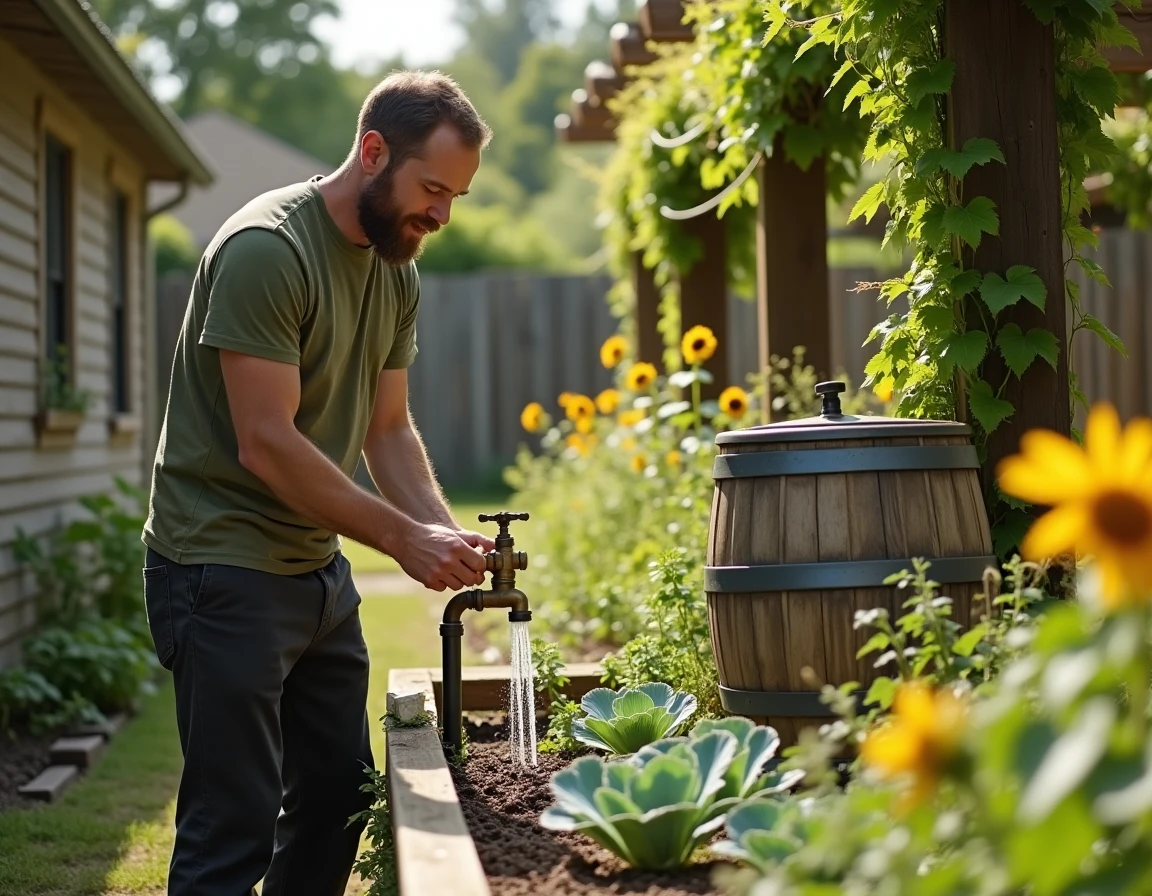
The rain garden mentioned above functions as a passive collection system. On a smaller scale, buried or above-ground tanks collect roof water for deferred watering during critical periods.
Drip irrigation, fed by gravity from an elevated tank, reduces consumption compared to sprinkler irrigation. The soil receives water directly at the base of the plants, without surface evaporation.
Choice of plants and soil structure
A living soil, rich in organic matter, retains more water than compacted or depleted soil. Amending the soil with homemade compost improves its water retention capacity over several seasons.
Mediterranean plants (lavender, rosemary, santolina) or ornamental grasses tolerate prolonged dry periods. Their integration into an ecological garden in temperate zones allows for reduced watering without sacrificing visual density.
Reclaimed materials and biodiversity: creating an original garden with what already exists
The originality of an ecological garden often lies in the materials used. Pallets, old bricks, dead tree trunks, broken tiles: reclaimed materials create micro-habitats while structuring the space.
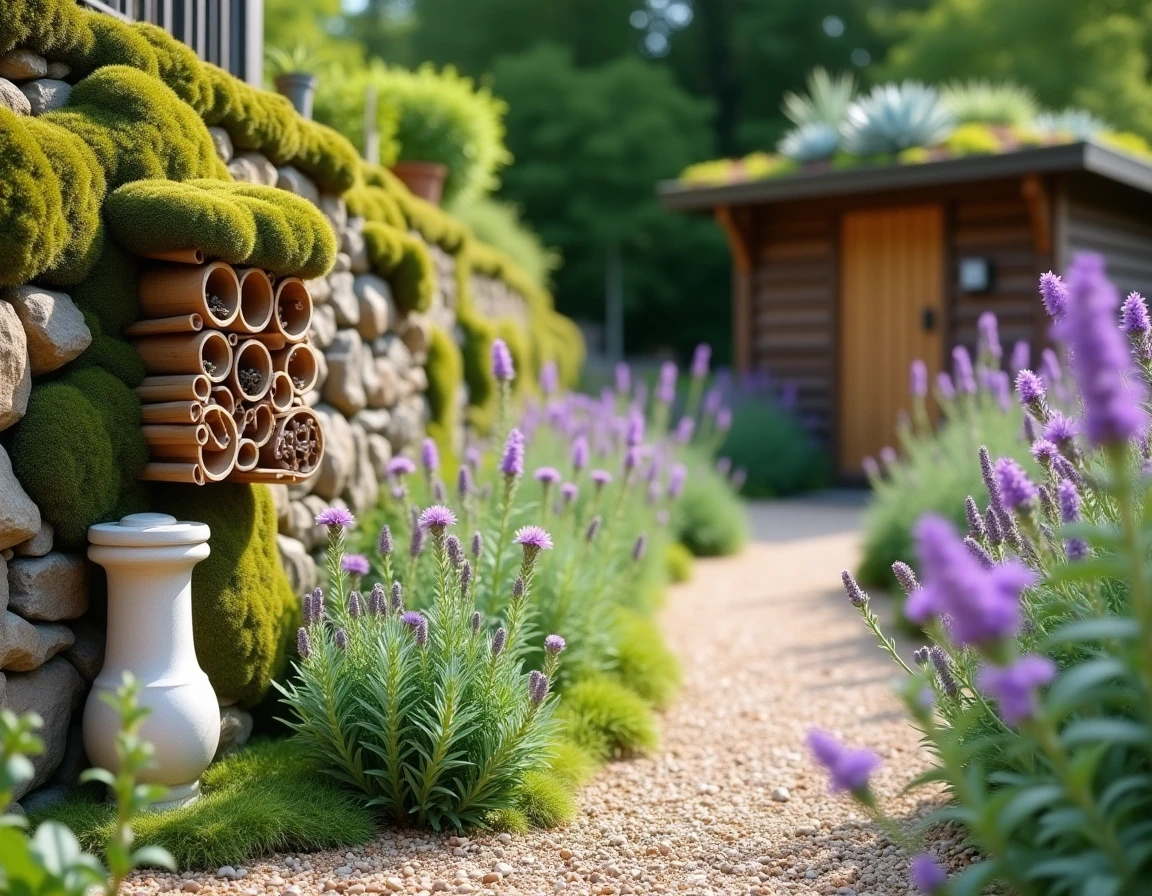
A dry stone wall, for example, shelters lizards, insects, and small mammals. It requires neither cement nor heavy foundation, and its construction remains accessible for self-building. Stacked logs in a corner of the garden form an “insect hotel” without the purchase of a prefabricated structure.
- Pallets transformed into raised garden beds are suitable for small spaces and polluted soils
- Recovered tiles or slates, placed vertically, define durable flower bed borders
- A fallen trunk in a flower bed serves as a support for mosses, fungi, and saproxylic beetles
- Each reclaimed element serves a dual function: structuring the garden and providing habitat
This approach makes each garden unique, as the available materials vary from project to project. It also avoids the use of plastic borders or synthetic geotextiles, whose limited lifespan generates difficult-to-recycle waste.
The most successful ecological garden is not the one that accumulates features, but the one that makes the soil, plants, water, and local materials work together. The key takeaway is that it is the diversity of plant layers and micro-habitats that determines the garden’s resilience to climatic hazards, much more than the budget invested in its creation.