Interior renovation in 2026 is less about color palettes and more about the choice of materials and the origin of furniture. Reinventing your home interior today requires rethinking supply sources even before opening a color chart.
Bio-based paints and indoor air quality: the real technical lever
The choice of paint is no longer limited to color. Low VOC emission ranges and bio-based coatings (vegetable linoleum, natural fiber panels) now occupy a central place in the catalogs of major brands like Tollens or Seigneurie.
We recommend systematically checking the A+ label for VOC emissions before any purchase. This classification, governed by the CSTB and driven by current indoor air quality requirements, determines the real comfort of a renovated room, far beyond its visual aspect.
Bio-based paints also change the available palette: natural pigments produce more muted, less saturated tones that harmonize with the trendy colors of 2026 without resorting to synthetic chemical agents. Specifically, several references shared by Ei Mag home magazine show that these formulations now perform as well in terms of coverage and durability as conventional ranges.
The compatibility of the substrate deserves special attention. A bio-based paint applied to an old lime-based plaster does not react the same way as on standard drywall. Testing on a wall sample remains the only reliable method to avoid unpleasant surprises (peeling, uneven absorption).
Upcycling and second-hand: structuring a decor project differently

Reuse becomes the starting point of the project, not an addition. The increase in second-hand furniture sales on platforms like Leboncoin, Selency, or Emmaüs reflects a change in method: first, we work with what exists, then we complement with new items.
This approach imposes a different discipline. Instead of starting with a mood board and then ordering, we observe that the most successful projects operate in three stages:
- Inventory of existing items that can be kept, with an assessment of their transformation potential (sanding, painting, reupholstering)
- Targeted search on second-hand platforms for structural elements (sideboard, table, main light fixture)
- New purchases only for technical pieces or non-substitutable comfort elements (mattress, recessed lighting system)
The purchase of second-hand items for home furnishing has been steadily increasing in recent years. This is not an aesthetic trend; it is a transformation of furniture sources that restructures interior decoration.
Materials and textures: dark wood, glossy effects, and tactile overlays
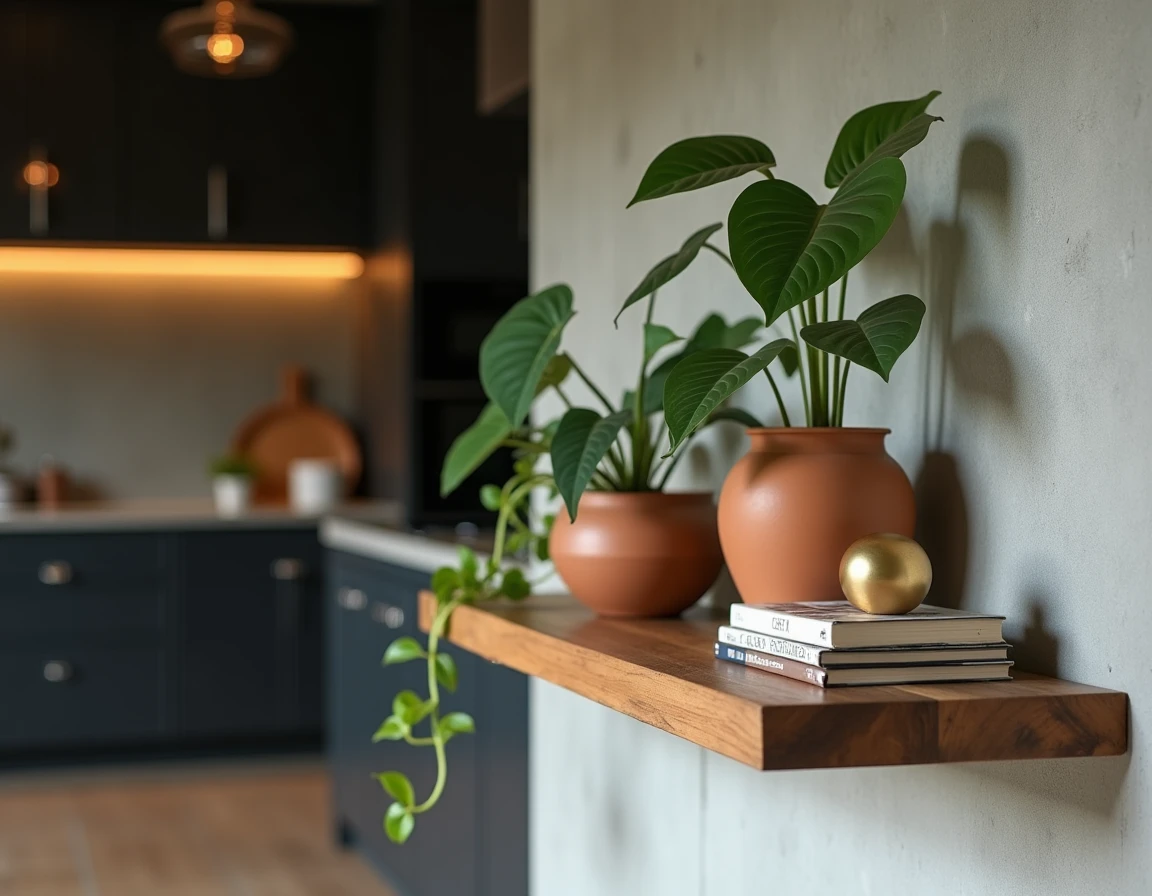
Decor trends for 2026 show a clear direction: dark wood, natural textures, and glossy finishes coexist in the same space. Walnut, smoked oak, and dark veneers replace the light Scandinavian woods that have dominated for a decade.
The glossy effect is returning on accent furniture and lighting, creating a contrast with raw materials (linen, stone, terracotta). This interplay of textures produces a visual depth that all-matte finishes do not allow.
We recommend limiting glossy surfaces to one or two elements per room. Beyond that, the overall effect shifts into a showroom aesthetic that ages quickly. A designer light fixture in blown glass paired with a solid walnut table is enough to establish the room’s vocabulary.
Interior colors 2026: stepping away from beige without tipping into excess
Bold colors work through controlled blocks, not accumulation. An accent wall in burnt earth or deep green, combined with adjacent walls in a warm neutral tone, structures the space without saturating perception.
A common pitfall is to multiply strong shades on several walls in the same room. Below fifteen square meters, a single colored wall creates sufficient impact. Beyond that, two opposing walls can work as long as natural light is generous.
Design lighting as a structuring element of interior decoration
Lighting is no longer a functional accessory added at the end of a project. The light fixture becomes the centerpiece that organizes the atmosphere of a room. This approach alters the usual chronology of decoration: choosing the main light fixture before the furniture allows for setting the lighting ambiance, then adapting materials and colors accordingly.
In practice, three technical points deserve attention:
- The color temperature (expressed in kelvins) determines the ambiance more than the wattage. For a living room or bedroom, staying below 3,000 K ensures a warm light compatible with dark woods and deep shades
- Dimmers are now compatible with most LED bulbs, allowing for intensity adjustment according to the time of day without multiplying sources
- Indirect lighting (LED strip behind a piece of furniture, wall sconce directed towards the ceiling) creates volume in small spaces and avoids the single ceiling fixture effect that flattens the room
Combining a sculptural light fixture in a central position with two or three peripheral indirect sources provides a depth that most standardized interiors do not achieve.
Ultimately, renovating a home interior in 2026 hinges on precise technical choices: air quality, furniture sourcing, light management. These three axes condition the durability of a project far more than the choice of a seasonal color.