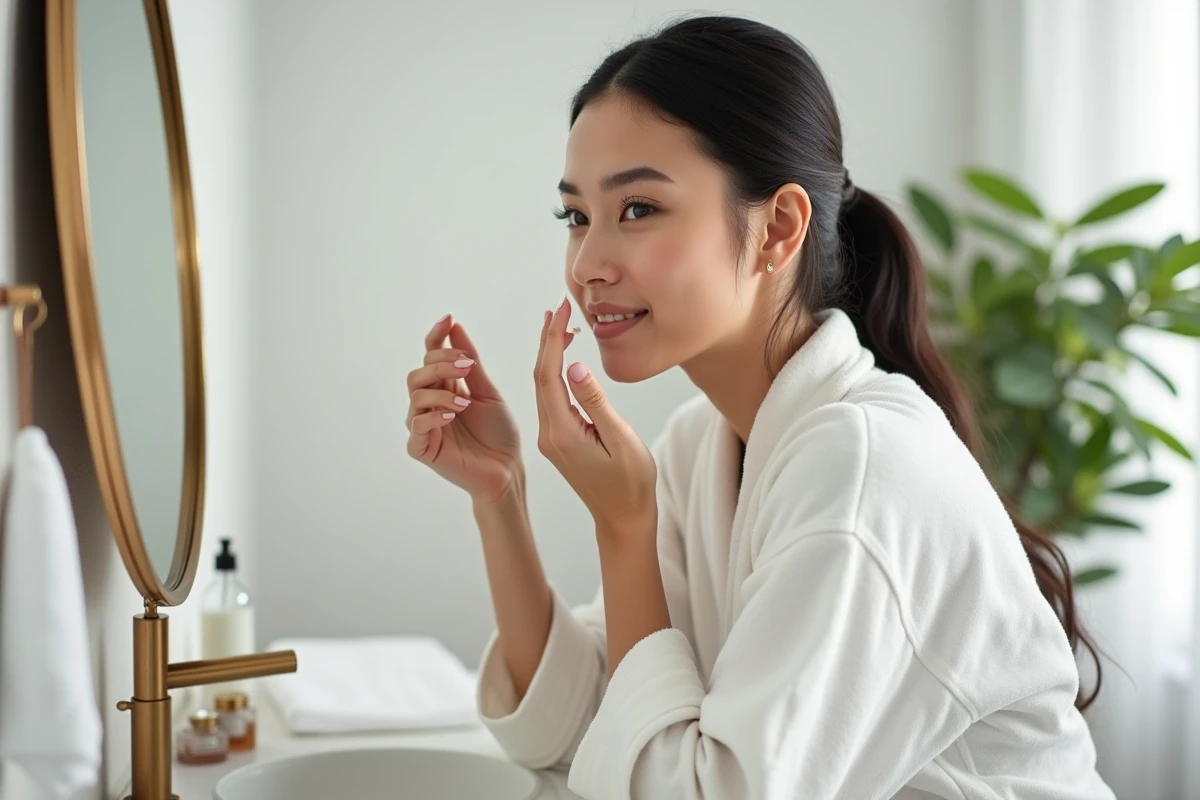
Beauty trends are evolving towards shorter routines, hybrid formulas, and increased attention to product composition. Minimalist skincare works well for skin without particular concerns, but mature or acne-prone skin does not react the same way to a routine reduced to three products. Adapting these trends to specific skin needs requires understanding some dermatological mechanisms before simplifying one’s skincare kit.
Minimalist Routine and Problematic Skin: What Really Changes
The principle of minimalist skincare is based on reducing the number of products applied daily. For skin without particular concerns, going from eight steps to three (cleanser, serum, sunscreen) works seamlessly. The difficulty arises when the skin shows signs of sagging and inflammatory breakouts simultaneously.
Mature skin prone to acne produces less sebum than it did at twenty, but lesions persist due to hormonal imbalances or a weakened skin barrier. Reducing one’s routine without considering this dual constraint often exacerbates one or the other problem. Effective minimalism targets active ingredients, not the number of steps.
The choice then falls on a gentle sulfate-free cleanser, a serum combining a low-concentration retinoid and hyaluronic acid, and a non-comedogenic sunscreen. Specialized platforms like https://www.univers-beaute.net/ allow for comparing formulations suitable for these mixed skin profiles.

Hybrid Face Care: Understanding Multi-Action Formulas
Hybrid skincare has become one of the most visible trends in recent seasons. The principle: a single product fulfills two or three functions (hydration, sun protection, complexion correction). This approach is appealing because it reduces time spent in front of the mirror and limits the risk of overloading the skin.
Tinted Serums and Creams with SPF: What to Watch Out For
A tinted serum with SPF replaces both lightweight foundation and sunscreen. For the protection to be effective, the amount applied must be sufficient. Under-application divides the actual sun protection by two or three.
On acne-prone skin, the choice of sunscreen filter is as important as the SPF displayed. Mineral filters (zinc oxide, titanium dioxide) are less likely to cause reactions than some chemical filters. Their downside on darker skin tones (white cast) has led some brands to develop micronized formulas that reduce this effect.
Double-Action Night Creams
Creams combining an anti-aging active ingredient (peptides, bakuchiol) and a soothing agent (centella asiatica, niacinamide) target reactive mature skin. Niacinamide regulates sebum production while strengthening the skin barrier, making it a relevant active for both dry and congested skin.
- Check that the concentration of niacinamide is among the first five ingredients on the INCI list to ensure a significant dosage
- Avoid creams containing both high-concentration glycolic acid and retinol, as the combination weakens sensitive skin
- Prefer gel-cream textures, which hydrate without leaving an occlusive film conducive to comedones
Makeup and the Plain Jane Trend: Adapting Natural to Every Skin Texture
The plain jane makeup trend, which focuses on a polished yet nearly invisible complexion, has dominated beauty searches since spring. The goal is to smooth the skin texture without masking it, using lightweight and buildable products.
This approach works as long as the skin preparation is adapted. On mature skin, a filling primer (based on volatile silicone) minimizes fine lines before applying foundation. On acne-prone skin, a mattifying primer localized on the T-zone is sufficient, while the rest of the face benefits from a simple hydrating base.

Medium-coverage and buildable foundations replace full-coverage formulas. They allow the natural texture of the skin to show through, which can be intimidating when dealing with acne scars. The trick is to apply a targeted concealer on pigmented areas, then blend the foundation over it by tapping rather than stretching.
Lip and Nail Care: The Active Ingredients That Matter Daily
Moisturizing lip inks are gaining ground over traditional lipsticks. Their long-lasting hold relies on pigments that adhere to the superficial layer of the lips, while an emollient complex prevents dryness. For lips prone to chapping (common in mature skin or under retinoid treatment), applying a repairing balm at night remains a step not to be skipped, even in a minimal routine.
For nails, polishes enriched with keratin or biotin strengthen the nail plate without requiring a separate treatment. Nude and pink shades dominate seasonal selections, but the technical challenge mainly lies in the base coat used before application.
- A base containing calcium strengthens brittle nails but excessively hardens soft nails, leading to cracks
- Base coats enriched with vitamin E are better suited for thin and soft nails by providing flexibility
- The drying time between the base and the color directly influences wear: waiting at least two minutes limits chipping
Customization Through Skin Analysis: What AI Changes in Beauty Routines
Smartphone skin analysis apps have been multiplying in recent seasons. Players like L’Oréal offer diagnostics via photo that assess hydration, pores, pigmentation spots, and wrinkles. The loyalty of millennial users increases when a customized routine is offered, a finding shared by several recent sector analyses.
The concrete benefit of these tools lies in seasonal adjustments. Skin that produces more sebum in summer and dehydrates in winter should not use the same products all year round. Regular analysis (every two to three months) allows for detecting changes before they become visible to the naked eye.
EU Regulation 2026/420 now governs the claims of cosmetic products marketed in Europe, including those generated by recommendation algorithms. Brands must justify the announced benefits through tests compliant with recognized protocols. This regulatory constraint enhances the reliability of suggestions generated by these applications, provided that the brand effectively adheres to the imposed framework.
Adopting a minimalist beauty routine does not mean applying less thought, but concentrating each action on an active ingredient whose role is understood. The time savings are real, as long as simplification is not confused with impoverishment of care.