A bitumen shingle is not cleaned like a concrete tile or a natural slate. The composite structure of the shingle (asphalt felt, fiberglass reinforcement, mineral granules on the surface) imposes a protocol where any mistake in pressure or chemistry permanently removes the protective layer. Here, we detail the methods that truly preserve the integrity of the material.
Manufacturer Warranty and Shingle Cleaning: The Overlooked Constraints
Manufacturers of bitumen shingles strictly regulate the authorized maintenance methods. High-pressure washing can remove mineral granules, lift the shingles, and result in the exclusion of damage from the warranty. Some warranties also specify the authorized products, their dilution rate, and the possible requirement to use a professional.
Before any intervention, we recommend consulting the manufacturer’s technical documentation. Most shingle roofs installed in France come from North American ranges whose warranty conditions are written in English, rarely translated by the distributor. Non-compliant cleaning, even if well-intentioned, can void a warranty that still has several years left.
When you master the shingle roof cleaning techniques suitable for your shingle model, you reduce the risk of disputes with the manufacturer while extending the service life of the material.
Soft Wash on Bitumen Shingles: Protocol and Chemical Agents
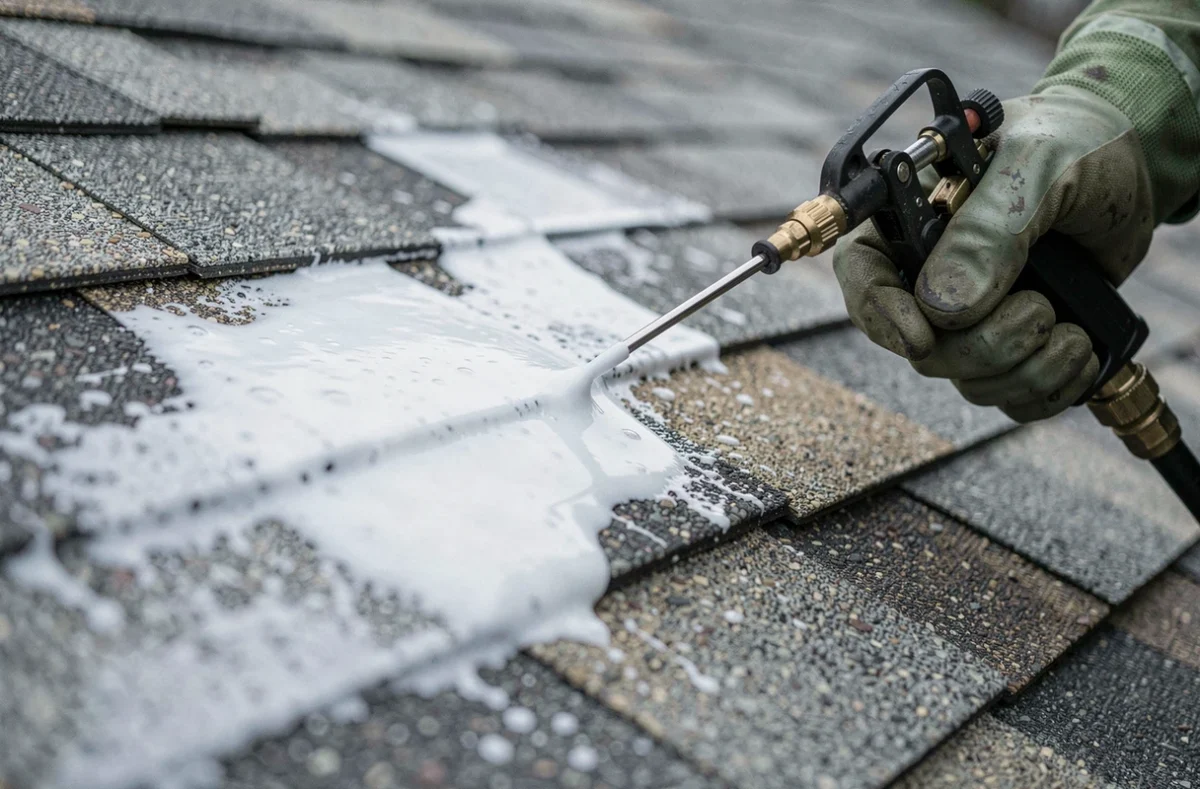
Soft wash (low-pressure washing with a biocidal solution) is the reference method for shingles. The rinsing pressure should never exceed that of a standard garden hose. Any rotary nozzle or high-pressure cleaner lance should be avoided.
The choice of product depends on the targeted organism, not the visible dirt. Algae, mosses, and lichens do not react the same way to chemical treatment. Professional recommendations distinguish contact time and concentration according to the type of colonization.
- Black algae (Gloeocapsa magma): a diluted sodium hypochlorite solution, applied by low-pressure spraying, with an appropriate contact time before gravitational rinsing
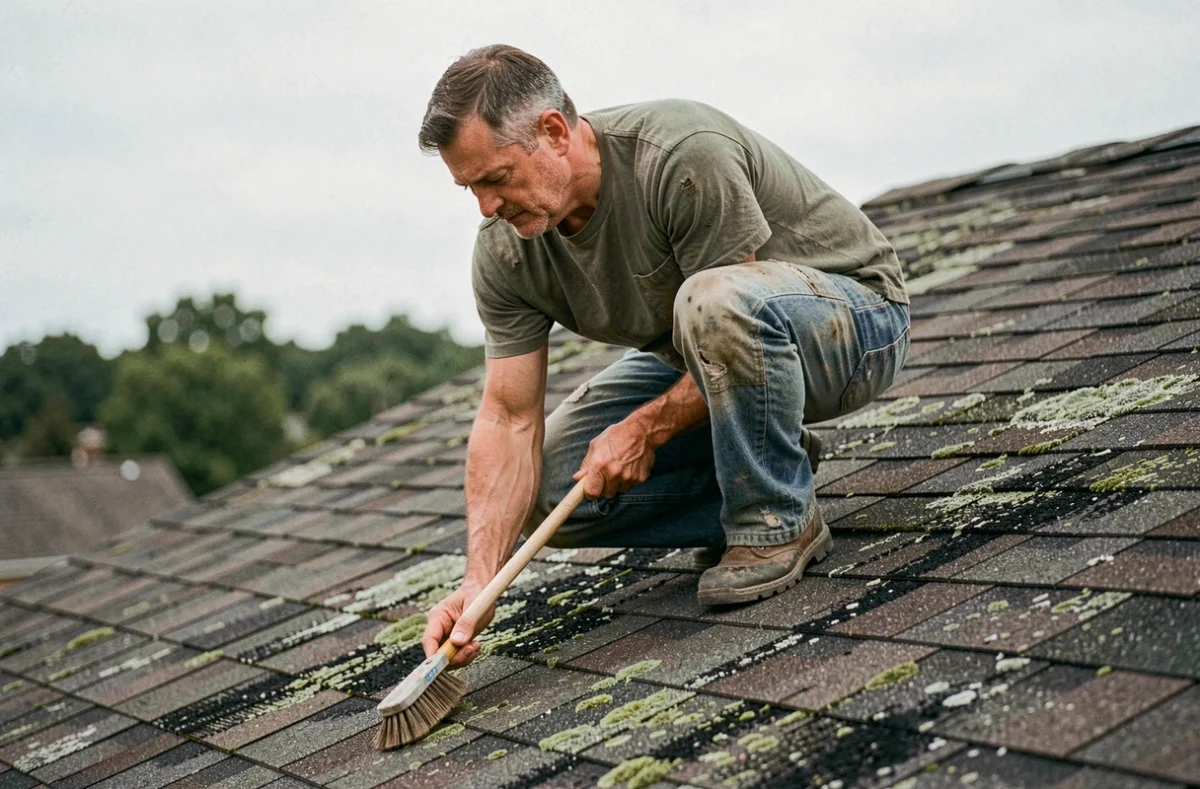
- Thick moss: prior mechanical removal with a soft brush (never a metal scraper), followed by the application of a biocidal anti-moss compatible with bitumen shingles
- Embedded lichens: biocidal treatment with prolonged contact time, often over several days, followed by gentle rinsing once the organisms are deactivated
In France, the professional use of a biocidal anti-moss is now linked to a regulatory requirement. Ensure that the product used has market authorization for this use.
Preliminary Diagnosis: What to Inspect Before Climbing on the Roof
Cleaning a degraded shingle accelerates its end of life. The diagnosis must precede any product application. We regularly observe moss removal interventions on shingles whose granule layer is already largely eroded, making cleaning counterproductive.
The diagnosis is not limited to the visible surface of the shingles. Peripheral areas and water drainage must be inspected. Blocked gutters or poorly ventilated edges promote moisture stagnation, the main cause of biological colonization.
- Condition of the granules: bare areas, accumulation of granules in the gutters (a sign of advanced erosion)
- Lifting or curling of the shingles, indicating a failure of adhesion or nailing
- Presence of cracks or tears on the underlying bitumen felt
- Clogging of valleys, gutters, and rainwater downspouts
If the shingles show significant bare areas, partial or total replacement takes precedence over cleaning. Applying a treatment to a substrate at the end of its life only delays a necessary repair.
Waterproofing on Shingle: Real Relevance and Application Conditions
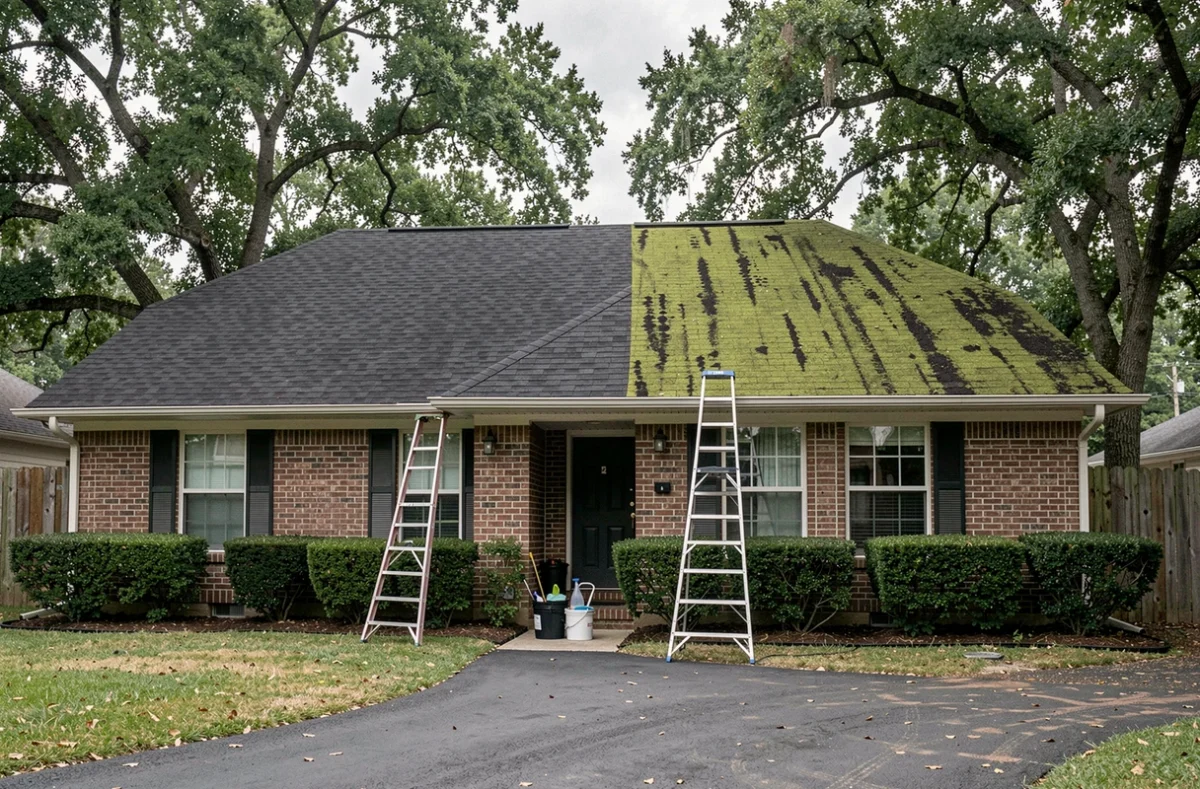
Waterproofing is not always relevant on a bitumen shingle. Waterproofing products are formulated for porous substrates (terracotta tile, concrete, natural stone). The shingle, due to its bituminous composition, already has intrinsic waterproofing. A poorly chosen waterproofing product can create a sealing film that prevents the substrate from breathing and traps residual moisture.
If the condition of the shingle justifies additional waterproofing (micro-cracks, partial loss of granules without immediate replacement planned), the product must be validated by the shingle manufacturer. The application occurs only after the complete sequence: biocidal treatment, cleaning, complete drying, visual inspection of the condition of the shingles.
Never apply a waterproofing product on a roof still colonized. The product would seal moisture and microorganisms under the protective layer, accelerating degradation instead of slowing it down.
Maintenance Frequency and Weather Conditions for Intervention
The frequency depends on the building’s exposure. A north-facing shingle roof, under vegetation cover, accumulates mosses and algae much faster than a clear and well-ventilated roof. In humid areas, an annual visual inspection and a preventive treatment every two to three years constitute a reasonable rhythm.
The intervention should take place in dry weather, on a substrate that is neither burning nor frozen. Biocidal products lose effectiveness under high heat (rapid evaporation) and do not penetrate properly on a cold substrate. The ideal window is in spring or early autumn, when temperatures remain moderate and rain is not forecasted in the hours following the application.
The final rinsing, when necessary, is done with clear water and low pressure, following the direction of shingle overlap (from ridge to eaves) to avoid any infiltration under the overlaps.
A properly maintained shingle with the right products and method retains its properties far beyond what aggressive cleaning would allow. The key remains to treat the substrate as what it is: a fragile composite membrane on the surface, not a concrete slab.