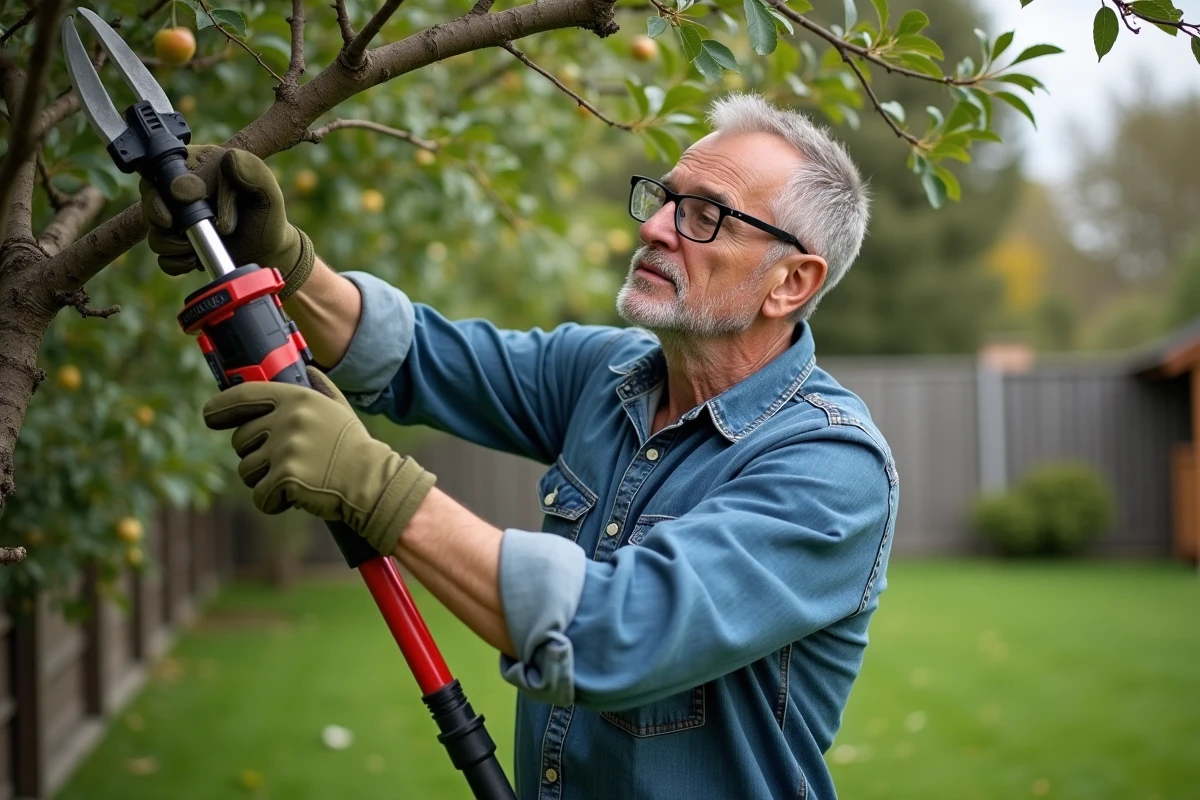
A pole saw is a lightweight chainsaw designed for cutting branches at height or in hard-to-reach areas. Its uniqueness lies in its top handle and a shorter guide bar than a traditional chainsaw, allowing for one-handed operation when the operator is harnessed in a tree. Choosing the right model requires understanding some technical mechanisms before comparing product specifications.
Battery ecosystem: the criterion that the product sheet does not detail
Most buying guides compare pole saws based on engine power and guide length. These parameters matter, but they obscure an upstream choice that determines the long-term budget: the battery platform one commits to.
Stihl, Husqvarna, Makita, or Dewalt now offer ranges where the same battery powers pole saws, hedge trimmers, blowers, and lawn mowers. Therefore, buying a battery-powered pole saw means choosing a complete ecosystem. Sharing batteries reduces overall costs and simplifies charging, provided that the platform’s voltage meets the needs of all targeted tools.
Before selecting a model, it’s best to list other garden tools already owned or planned. If the collection is already with a brand, staying within the same system avoids accumulating incompatible chargers. Detailed comparisons are available on elagueuse-warrior.com, allowing for cross-referencing platforms before making a decision.
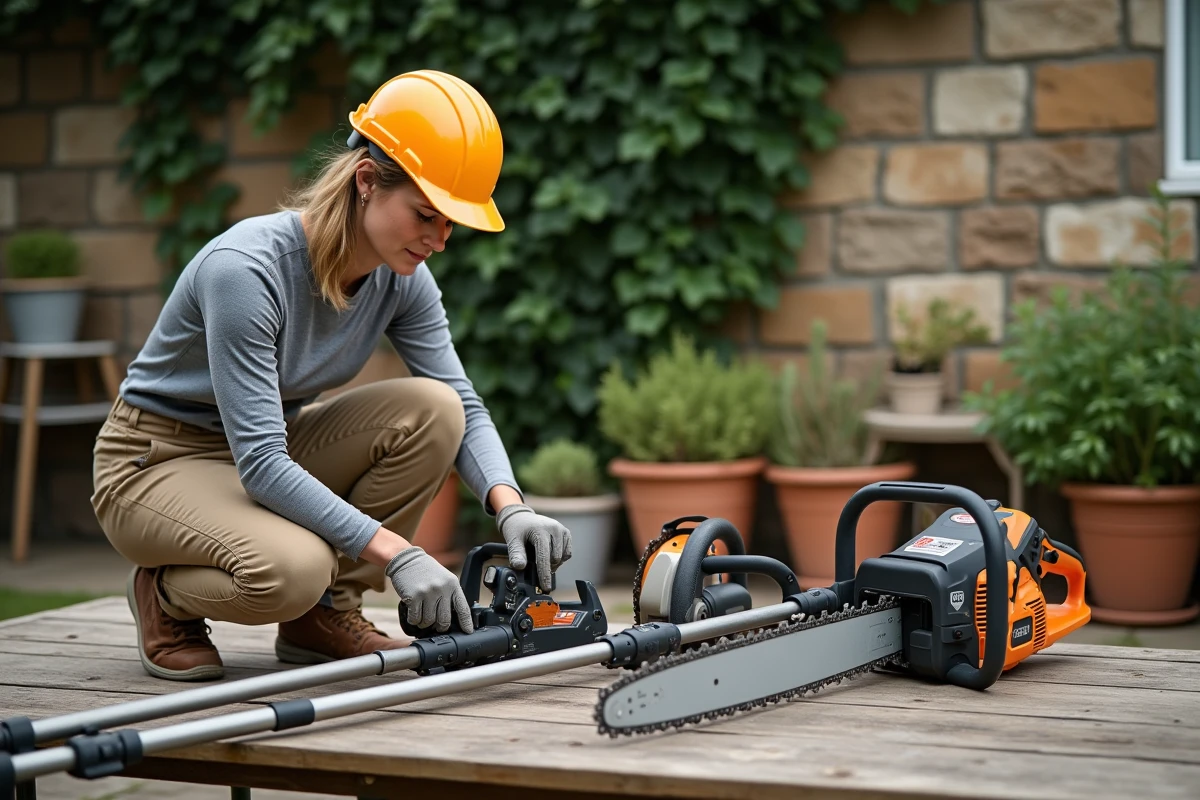
Traditional pole saw or pole saw on a stick: two tools for two situations
These two categories do not serve the same purpose, and confusing them leads to an unsuitable purchase.
Top handle pole saw
Compact and lightweight, it is held with one hand at height. Its guide bar typically measures between 25 and 35 cm. It excels at precision pruning: removing dead wood, thinning medium branches, and formative pruning on fruit trees. It requires climbing the tree or using a lift, which involves a harness and minimal training in safety gestures.
Pole saw
The motor is fixed at the base (or the top depending on the models) of a fixed or telescopic pole. The operator remains on the ground, eliminating the risk of falling. The downside: the weight at the end of the arm tires quickly, and cutting precision decreases with distance. Models with an adjustable head (from 0 to 90 degrees) partially compensate for this flaw by allowing the branch to be approached at a favorable angle.
For a garden with moderately sized trees, the pole saw is sufficient in most cases. The top handle pole saw is more justified for tall subjects or frequent interventions requiring precision work in the canopy.
Chain and sharpening: their direct impact on tree health
The choice of guide and chain affects not only cutting performance. A well-sharpened chain cuts cleanly through wood fibers, allowing the branch to heal quickly and limiting the entry of fungi or bacteria. A dull chain tears fibers instead of cutting them, leaving an irregular wound that endangers the tree’s health.
Two parameters deserve special attention:
- Chain tension: a chain that is too loose derails or cuts unevenly, while a chain that is too tight prematurely wears the guide and sprocket. Checking takes a few seconds before each session and is done without tools on most recent models.
- Sharpening frequency: after a few hours of use, the chain loses its sharpness. Regular sharpening (with a round file or electric sharpener) extends the chain’s lifespan and ensures a clean cut.
- Chain speed: sufficient speed combined with good sharpening produces a clean cut. High-voltage battery models now catch up with gas models in this regard, where early electric models lacked responsiveness.
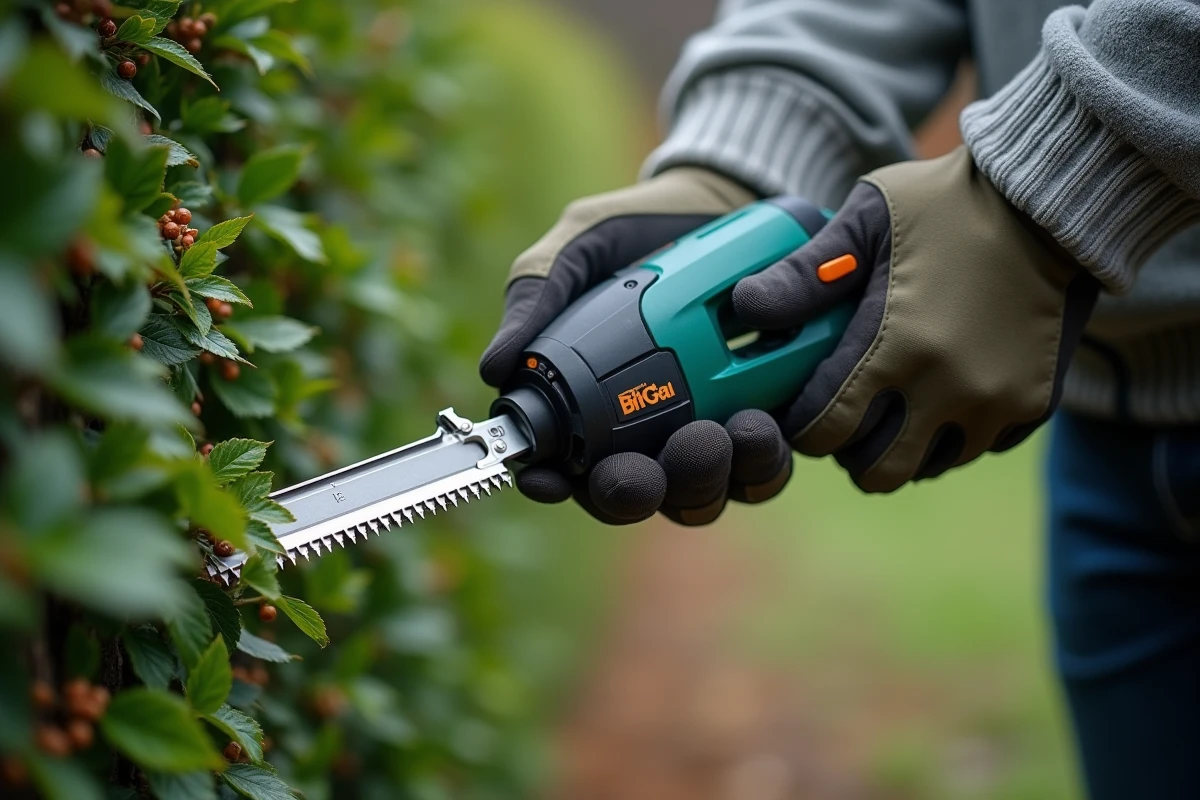
Personal protective equipment for safe pruning
Recent recommendations from specialized retailers and home insurers converge: PPE is no longer reserved for professionals equipped with large gas chainsaws. Even a small battery-powered pole saw can project chips and cause serious cuts in the event of a chain kickback.
The minimum list of equipment to prepare includes:
- Certified cut-resistant gloves, which protect against accidental contact with the moving chain
- Protective goggles or full face shield, for wood and sap projections
- Closed shoes with non-slip soles (safety boots for ground work, climbing shoes for work at height)
- Helmet with hearing protection if the model is gas-powered, as the noise level often exceeds the prolonged comfort threshold
For work at height with a top handle pole saw, a full harness and a safety lanyard are required. This type of intervention, if not mastered, is best entrusted to a professional pruner.
Gas or battery power: deciding based on usage frequency
A gas pole saw offers sustained power and autonomy limited only by the fuel tank. It is suitable for long sessions or hard woods of large diameter. Its downside: weight, noise, vibrations, and engine maintenance (spark plug, filter, oil-gas mix).
The battery pole saw has largely closed the power gap thanks to recent high-voltage platforms. It starts instantly, produces no smoke or excessive noise, and its maintenance is limited to the chain and guide. The autonomy remains its main limitation: depending on the wood density and branch diameter, a standard battery covers between one and several hours of effective work.
For a private garden with occasional pruning sessions, battery represents the best compromise between comfort and efficiency. Gas remains relevant on large, remote areas far from any power outlet, or for intensive pruning campaigns over several days.
The last point to check before purchase remains the ratio between the machine’s weight and the expected duration of use. A pole saw held at arm’s length for an hour tires the shoulders and wrists, degrading cut quality and increasing the risk of accidents. Testing the grip, if possible in-store, remains the most reliable action to validate a choice.