Google Maps satellite maps consistently display north at the top of the screen, regardless of the searched address. However, the actual orientation of a building or plot does not always coincide with the street alignment on the map.
Integrated tools allow you to obtain the exact angle of a facade or land, without requiring knowledge in geomatics. Some functions remain underutilized, while a simple click is enough to reveal a precise orientation, useful for optimizing sunlight as well as planning a solar installation.
Why the orientation of a house is essential for your projects
Choosing the orientation of a house means deciding the rhythm of light, thermal comfort, electricity bills, and even the property’s value. Positioning the living room to the south allows for a bright room, warm in winter, and naturally energy-efficient. We are talking about a tangible reduction in energy consumption, sun-drenched days, and an ideal location for photovoltaic panels: efficiency increases, the house adapts, and life becomes easier.
Conversely, technical rooms find their interest on the north side: coolness maintained during heat waves, thermal stability, areas less exposed to the sun. To the east, the morning light awakens the kitchen or bedrooms, while the west prolongs evenings on the terrace or in the dining room.
The stakes go beyond simple interior organization. Orientation influences property valuation, the profitability of a solar installation, and daily comfort. A wise orientation can lead to up to 30% energy savings. For every extension, garden project, pool, or renovation, this parameter becomes essential from the very first considerations.
To carry out this analysis, knowing the orientation of an address on Google Map becomes a decisive asset. This approach guides choices, refines investment, and allows for imagining a habitat in harmony with its environment, local weather, and the sun’s trajectory.
How to easily spot the orientation of an address on Google Maps
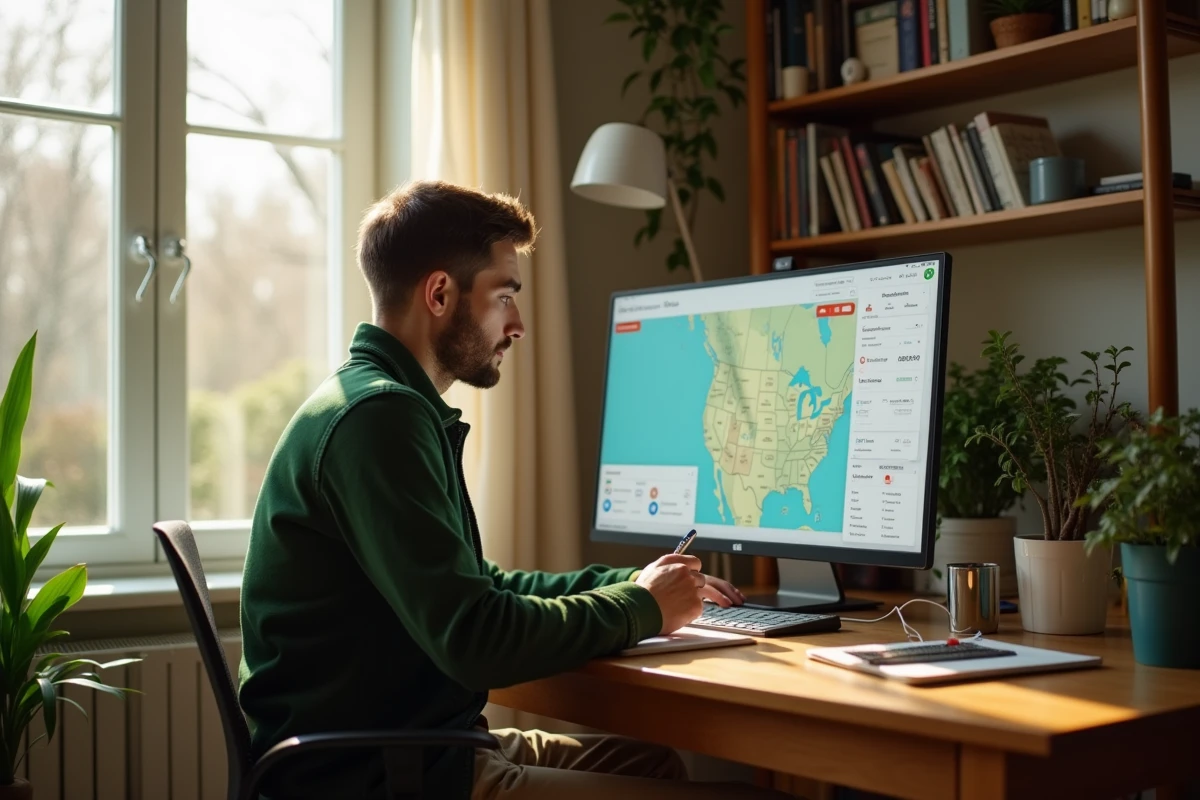
Identifying the orientation of a house with Google Maps is within everyone’s reach. The web interface offers several tools to obtain the cardinal points of an address. The first step is simple: type the address into Google Maps, and the map displays, with north always at the top.
For a more detailed analysis, activate satellite view. This perspective precisely reveals the roof, the arrangement of facades, and their exposure to the sun. On the left side of the screen, the integrated compass indicates the exact direction of north. Rotate the map with the left click: the compass adjusts and displays a rose that locates each orientation.
Another valuable tool is Street View. Drop the little yellow person near the address, and observe the light, the position of the sun, and the shadows stretching across the facades. This play of shadows allows you to distinguish a south-facing facade, bathed in light, from a north wall that is often darker. This direct observation reveals at a glance the actual exposure of each facade.
To enhance efficiency, here is a summary of the tools to use:
- Use the integrated compass to locate the cardinal points.
- Switch to satellite view to locate the building in its context.
- Utilize Street View to observe the distribution of light on the facades.
The immediate environment also plays a role: trees, neighboring buildings, or reliefs can mitigate or enhance sunlight. The analysis on Google Maps, enriched by shadow reading, allows for precise evaluation of the actual orientation for any project, whether it concerns insulation, greening, or solar panel installation.
Concrete ideas to leverage orientation in layout and energy
Mastering the orientation of a home, revealed by Google Maps, paves the way for relevant decisions regarding interior layout and energy performance. Each facade has its advantages. The south floods the living room or dining room with light while ensuring maximum yield for photovoltaic panels or a conservatory. On the north side, the garage and laundry room remain sheltered from temperature rises and limit heat loss.
Orientation also influences the choice of windows and glazing. In the north, triple glazing is essential to combat thermal losses. In the south, prioritize high-performance double glazing, which captures heat in winter and reduces heating needs. West-facing facades, more sensitive to summer overheating, benefit from suitable equipment: blinds, roller shutters, or solar control glazing make a difference.
The placement of the garden or pool also depends on orientation. Installing a terrace to the west allows you to enjoy warmth in the evening, while a south-facing conservatory promises bright and pleasant winters.
Here are some concrete suggestions to make the most of this orientation:
- Adapt the choice of window materials (PVC, wood, aluminum) according to exposure to enhance insulation.
- Take advantage of financial aids, such as MaPrimeRénov’, CEE, Éco-PTZ, reduced VAT, for your insulation and energy optimization work related to orientation.
Each project relies on this invisible map that structures comfort, property value, and energy efficiency of a home. Orientation, far from being a mere detail, becomes a lever to reinvent space, control expenses, and sustainably enhance the habitat. Ultimately, sometimes all it takes is a change of perspective and a click to transform the situation.