Scraping a coating less than 24 hours after application? The maneuver seems trivial, yet it can lead to a host of unpleasant surprises. While some mixtures tolerate quick intervention, many require a precise timing, often overlooked or dismissed by the impatience to see the project progress. Ignoring the manufacturer’s advice or improvising based on the weather risks the appearance of cracks, lack of adhesion, or unsightly irregularities. Experienced facade workers affirm: each coating has its own intervention window; neglecting this detail sometimes means having to start all over again.
Scraping a coating the next day: the real parameters to consider
Respecting the drying time recommended often saves one from many inconveniences. However, on a project with tight deadlines, the temptation to scrape the next day arises insistently. Except that each coating, whether single-layer, hydraulic lime, or aerial, evolves at its own pace. The temperature, the humidity level, the thickness, the substrate: all these elements change the game. A facade exposed to wind or sunlight can accelerate the setting but also weaken the final result.
Some adjust the conditions with admixtures or a retarder to maintain control over the timing. But scraping the coating too early causes it to deform; too late, it resists, and the surface gets damaged. The best compass? The finger test, simply: press lightly; the coating should mark but not stick. This gesture replaces many overly theoretical instructions. Those who want to delve deeper can read scraping a coating the next day on Immobilier Hebdo for a detailed analysis of the right reflexes according to the season, thickness, and type of coating used. Amateurs and professionals alike face the same pitfalls: misunderstanding residual humidity, neglecting a rainy episode, or starting without checking the true setting of the material.
How to recognize the right moment to intervene?
Facade workers know that certain signals are unmistakable. First test: the pulp of the finger on the coating. If the imprint is left without the material sticking, it means drying has begun but is not complete. This surface check gives a good idea of the level of anchorage to the substrate.
Other signs are easy to spot: the color of the coating shifts from dark to light as it dries, and the shade becomes uniform. An area exposed to wind or sunlight may dry twice as fast as a shaded part, so each section must be visually inspected to avoid a mismatched finish.
Here are the concrete actions to take to check if it’s time to scrape:
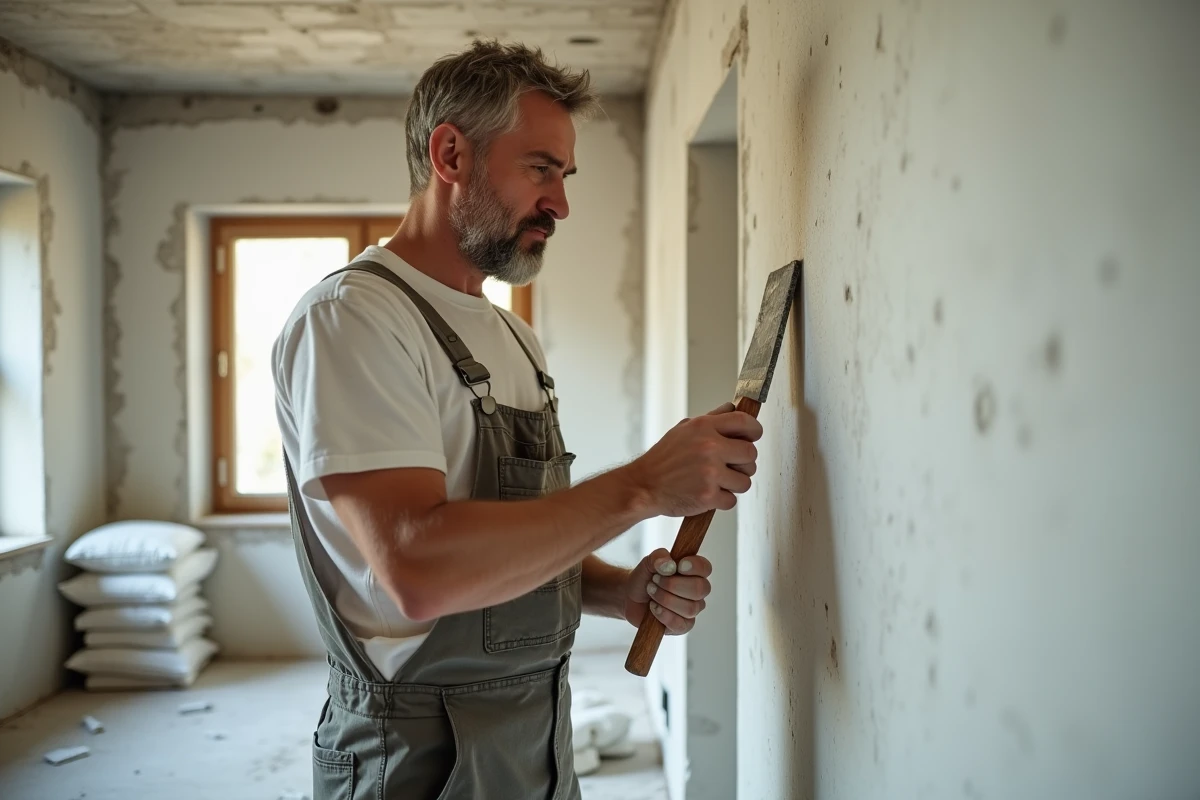
- Scraper test: tackle a discreet area. If the material falls into fine powder, that’s perfect. If it forms clumps or remains sticky, it’s too early.
- Quality of the finish: on a ready coating, scraping is smooth and even. If it’s too fresh, it tears; if too dry, you need to insist, and the surface may suffer.
Old or highly absorbent walls accelerate the drying rate, while a dense substrate slows it down. For a homogeneous finish, each area deserves careful checking, especially corners and joints, often overlooked by those in a hurry.
Common mistakes and tips to avoid trouble
Scraping too early leads to defects: visible marks, uneven shades, fuzziness. Delaying too long results in a hardened surface, making the work tedious, and micro-cracks may appear. Weather conditions are crucial: a soaked facade or a humid atmosphere makes the material temperamental, with risks of early mold.
To minimize surprises, the tools play a role. A wide scraper for efficiency, a sponge float for finishing touches, a wire brush for reliefs. A key piece of advice: always start with a less visible area, check the coating’s reaction before tackling critical zones. If the lime drying is too fast, a few sprays of water prevent the formation of powdery surfaces that are hard to recover.
Keep these basic tips in mind throughout the project:
- Monitor color contrasts: partial or poorly controlled humidification leaves stains that persist even after finishing.
- Clean your tools with clear water frequently: any residue of hardened material marks the surface with unwanted scratches.
- Immediately protect completed areas with a UV protective net or a tarp to slow evaporation or prevent sudden rain.
If a defect appears, it’s better to do a small touch-up with the float rather than a general sanding that would damage the uniformity of the work. Another rarely mentioned caution: the wall must be prepared with the right amount of water before application. A scorching or soaked substrate harms the setting and weakens the entire coating.
Ultimately, respecting the rhythm of the coating ensures a facade has a neat and lasting appearance. Finding the right gesture at the right moment avoids the frustration of starting over… and gives the surface the character it deserves, for years without unpleasant surprises.